
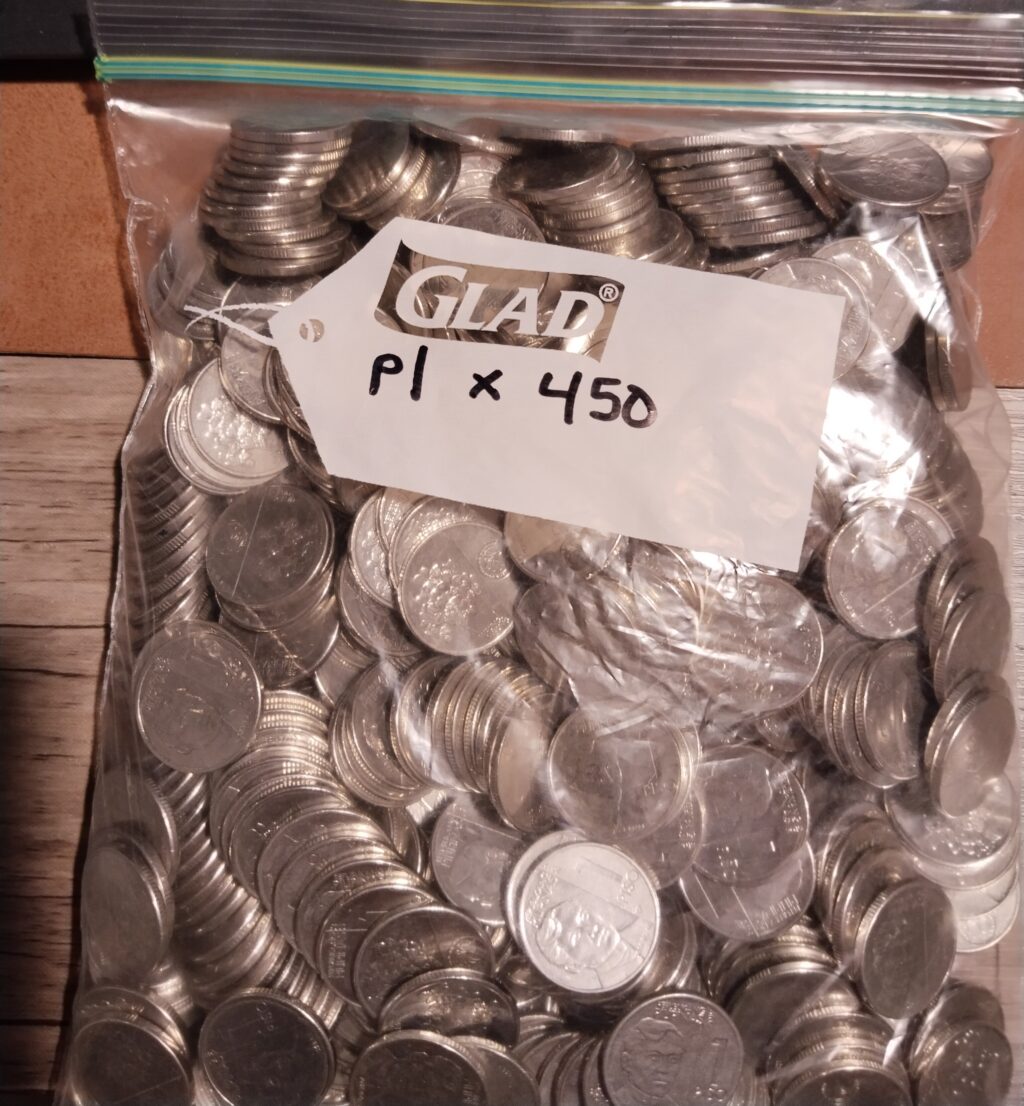
I have a large wooden bowl that sits on the top shelf of my worktable at home, and it is the repository for loose change. When the purse or pocket gets a little heavy with coins, lighten the load by tossing them in the bowl; and then later, when you need a snack or a soda from the convenience store downstairs, or fare for the jeepney or tricycle, or what have you, help yourself. It is a casual model of financial resource management that I would be willing to bet almost every household has; a totally normal thing.
A couple of years ago, the Bangko Sentral ng Pilipinas (BSP), the Philippines’ central bank, got a little scratchy about what it perceived (correctly) as coin-hoarding among the population, and launched a pilot project to install coin redemption machines in a couple dozen malls around the country. All one had to do was take his or her stash to the machine, dump it in, and it would credit the amount to one’s digital wallet (GCash or Maya here in the Philippines), or issue a credit voucher for the major retailer (SM in most cases, but some machines were in malls owned by Robinson’s) where the machine was located, so that the customer could pick up some goods.
The program ran for about a year and a half, I think, and then a couple of months ago, the BSP removed all the machines; the excuse it gave was that the program needed to be updated and revised, but that the machines would eventually be redeployed.
To be fair, the machines were a little balky, and apparently required an attendant standing by at all times to assist customers with jams, or the collection bags being filled (something that happened to me a couple of times), or using the interface to have what was collected properly credited. Nevertheless, they were popular; of the three or four times I used the machine located in the SM Customer Service area at Megamall, there was never a line of at least two or three people.
In other countries, coin collection machines are a normal thing; it is a bit bizarre that they are considered a novelty here, but this is a country that hasn’t figured out how to make those paper rolls to organize coins yet, and still resorts to binding them up with scotch tape, so perhaps that is not surprising.
Here’s the thing: the BSP’s original source of stress, that the supply of coins was diminishing because everyone was hoarding them, has not gone away, and it will not, because of the way cash transactions work here; it is inevitable that one will accumulate a great number of coins. It is a pretty good bet that almost every household in the Philippines has a coin stash of one sort or another, and that coins accumulate faster than they are spent for little everyday expenses. In my house, for example, I have the big wooden bowl on top of my workstation; the rule is, if you need some spare change for something, help yourself, and if you have extra change you don’t feel like carrying around, turn in it.
At the moment, we here in the Philippines are experiencing some economic stress due to the effects of the war in the Middle East, and it also happens to be the beginning of the new school year. This is exactly the time that households, especially those with school-aged children, might consider “breaking the piggy bank” to meet some expenses.
At the same time, the BSP (along with the rest of the government) is wringing its hand with worries about how to support consumer spending and get money moving through the economy. One simple solution – putting the coin machines back into service – is staring them right in the face, and it’s a solution that comes at absolutely no cost to government coffers. I cleaned out my change bowl only because it was literally overflowing; but for everyone of one someone like me, there are probably 100 others who are cleaning out theirs because they need the money.
Get with the program, BSP. Put the coin machines back.